The pantry
Get to know the jars, packets, and ingredients you reach for.
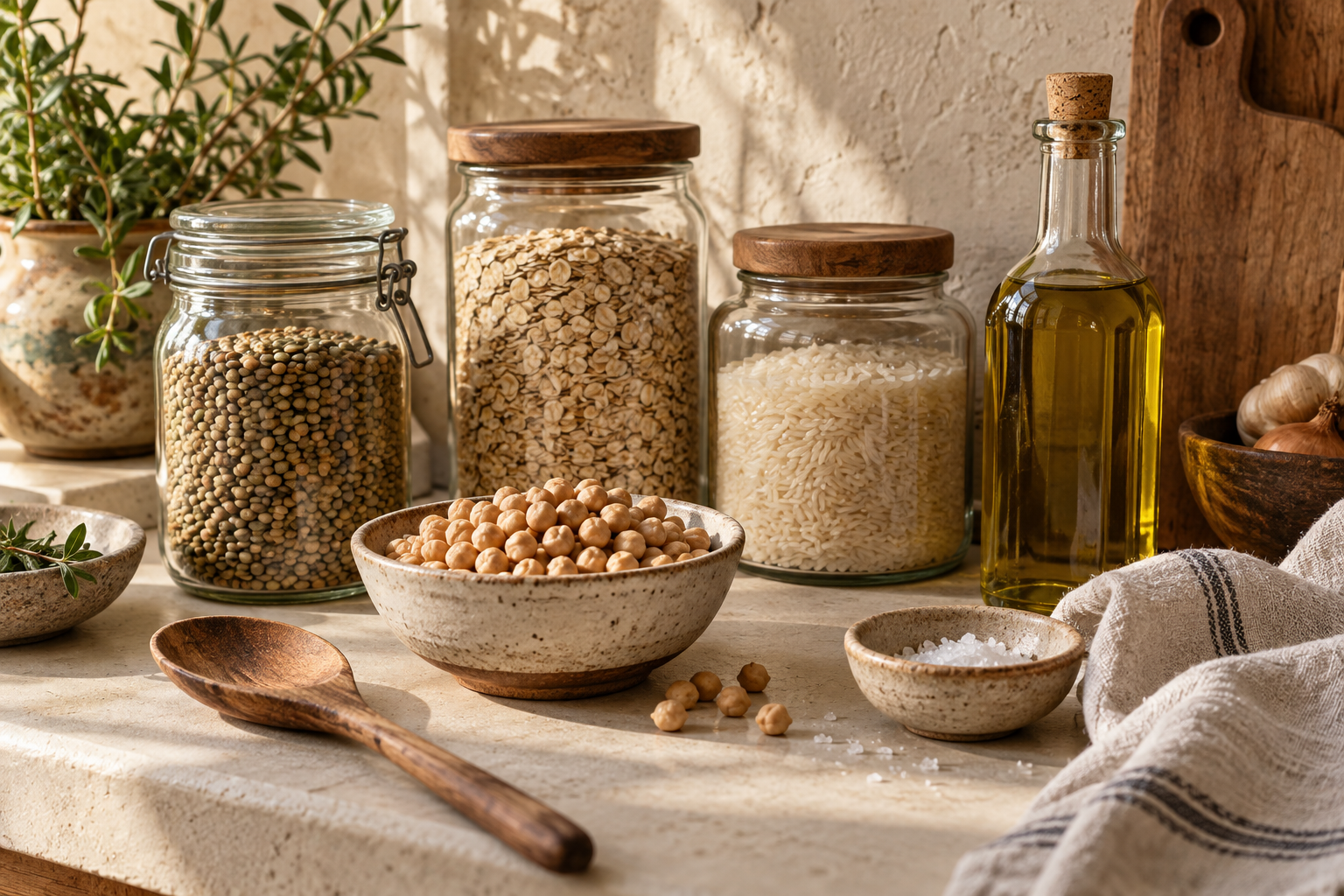 The pantry
The tin of chickpeas with two useful parts
Drain the beans deliberately instead of automatically tipping everything down the sink.
The pantryRed lentils and brown lentils have different jobs
Decide whether you want a soft soup or distinct little lentils.
The pantryA small pantry beats an ambitious one
Buy ingredients you can name a meal for.
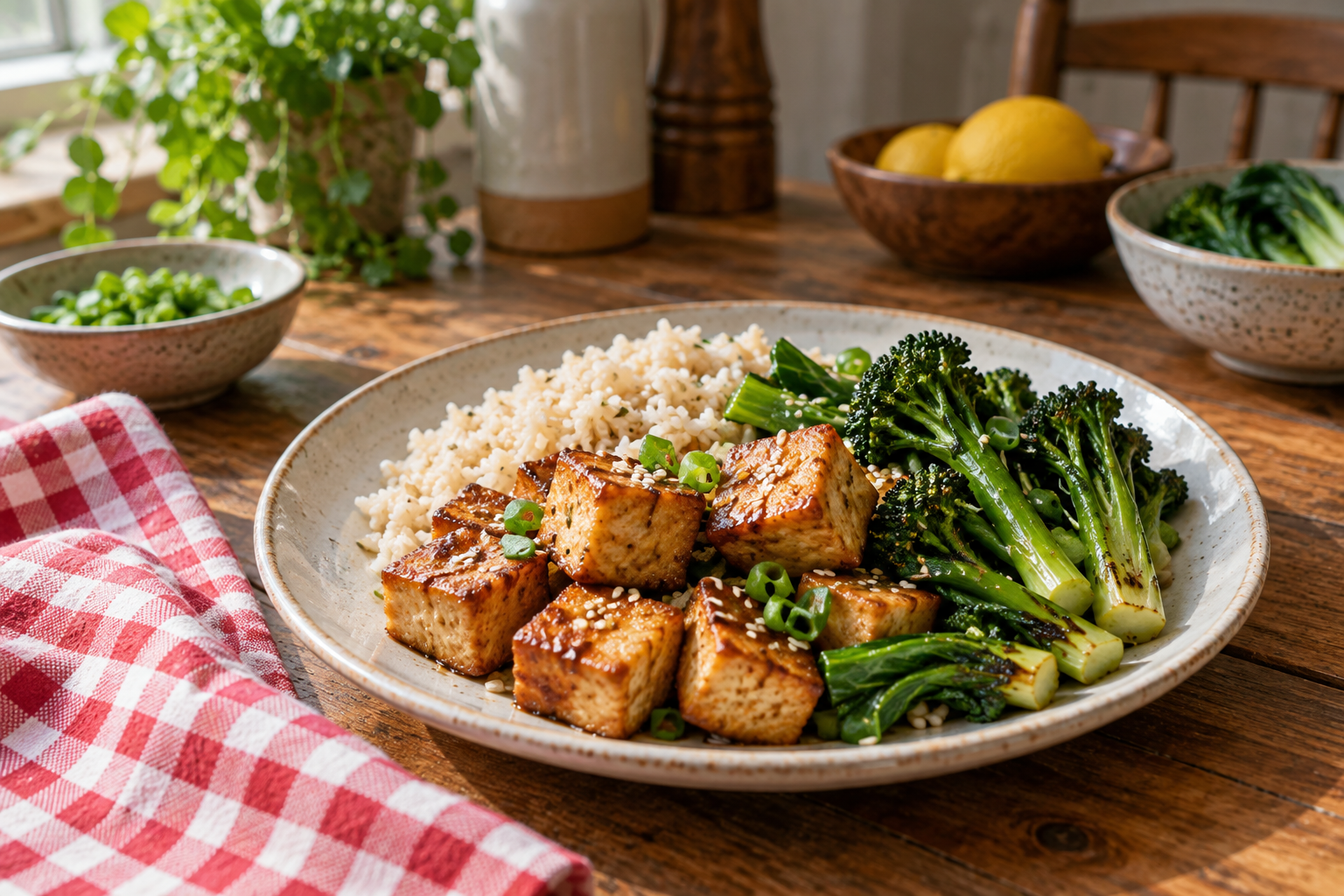 The pantry
Firm tofu and silken tofu are not the same shortcut
Pick the texture before planning the cooking method.
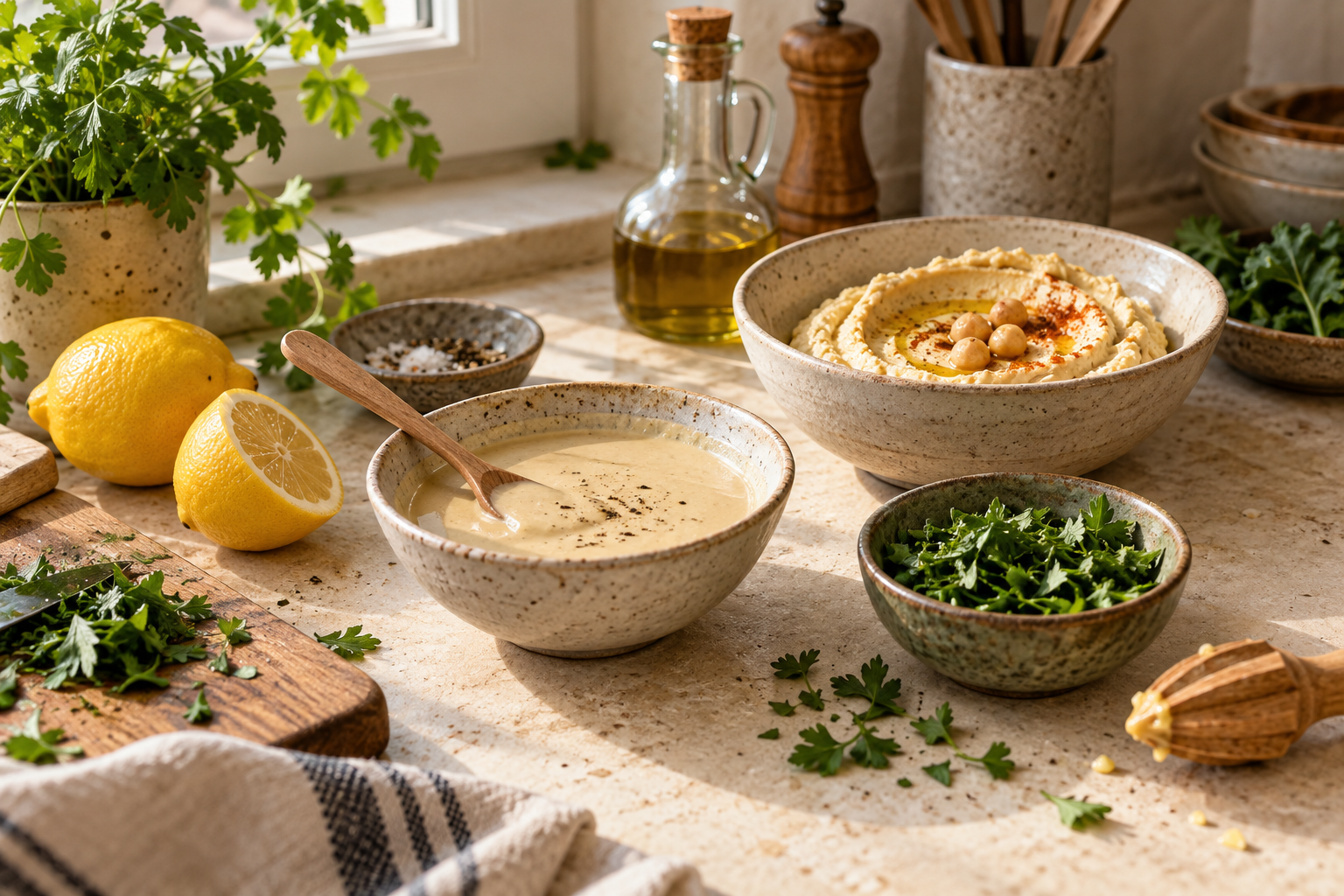 The pantry
Why tahini separates in the jar
Stir from the bottom before measuring a spoonful.
The pantryChoose plant milk for the job in front of it
A good drink and a good savory cooking ingredient are not always the same carton.
The pantryNutritional yeast is a seasoning, not a requirement
Use it where you enjoy its savory flavor, and check the label for anything else.
The pantryTomato paste needs a place after opening
Portion the remainder while you still remember what it is.
The pantryCoconut milk: read the name and the fat content
A drinking carton and a cooking tin may produce very different sauces.
The pantryKeep one useful vinegar within reach
Learn its strength before collecting more bottles.
The pantryFrozen peas earn their shelf space
Take only what you need and keep the rest frozen.
The pantryThe dried herb you actually finish
Store a modest amount away from steam and bright light.
The pantryPaprika can be sweet, hot, or smoky
The word on the front of the jar is only the beginning.
The pantryOats: rolled, quick, and steel-cut
Similar ingredients can need very different amounts of time in the pan.
The pantryBrown rice and white rice need separate instructions
Keep the cooking directions when decanting into a jar.
The pantryCanned beans are a practical starting point
Convenience leaves more room to learn seasoning and texture.
The pantryDried beans deserve their own plan
Learn the method for the particular bean before choosing an appliance.
The pantryStore nuts for the way you use them
A small working jar and a colder reserve can make sense.
The pantryA jar of mustard does more than dress a sandwich
Start with a little in dressings and bean dishes.
The pantryBuy bread with tomorrow in mind
Freeze the portion you are unlikely to finish while it is still in good condition.
The pantryKeep the lemon zest before the juice
Zest first, while the fruit is still easy to hold.
The pantrySesame oil is often a finishing ingredient
A few drops of toasted oil can change the whole bowl.
The pantrySoy sauce is seasoning with a salt budget
Taste the stock and sauce together before reaching for the salt.
The pantryFrozen spinach is a different ingredient from fresh leaves
Account for the water before adding it to a filling.
The pantryChoose plain yogurt before choosing a brand
Sweetness and flavorings matter more than the picture on the tub.
The pantryA can of tomatoes is not always the same sauce
Whole, chopped, and crushed tomatoes bring different textures to dinner.
The pantryBuying spices without building a museum
Start with the seasonings that appear in meals you already want to cook.
The pantryKeep labels when you decant ingredients
The name is useful; the cooking and allergen information can be essential.
The pantryThe freezer needs portions, not just containers
Freeze an amount you can use without thawing the whole batch.
The pantryKeep a small “use next” space
Visibility often solves more waste than another ambitious recipe plan.
The pantryBest-before and use-by wording depends on where you live
Read the product's storage directions and local guidance together.
The pantryKeep a stock you would be willing to sip
Strong stock can dominate a small, simple dish.
The pantryA shopping list that leaves room for dinner
Choose a few meals, then buy ingredients that can move between them.