A cupboard full of unfamiliar ingredients can make cooking feel harder. Each packet becomes another decision, and several may only fit one recipe you no longer feel like making.
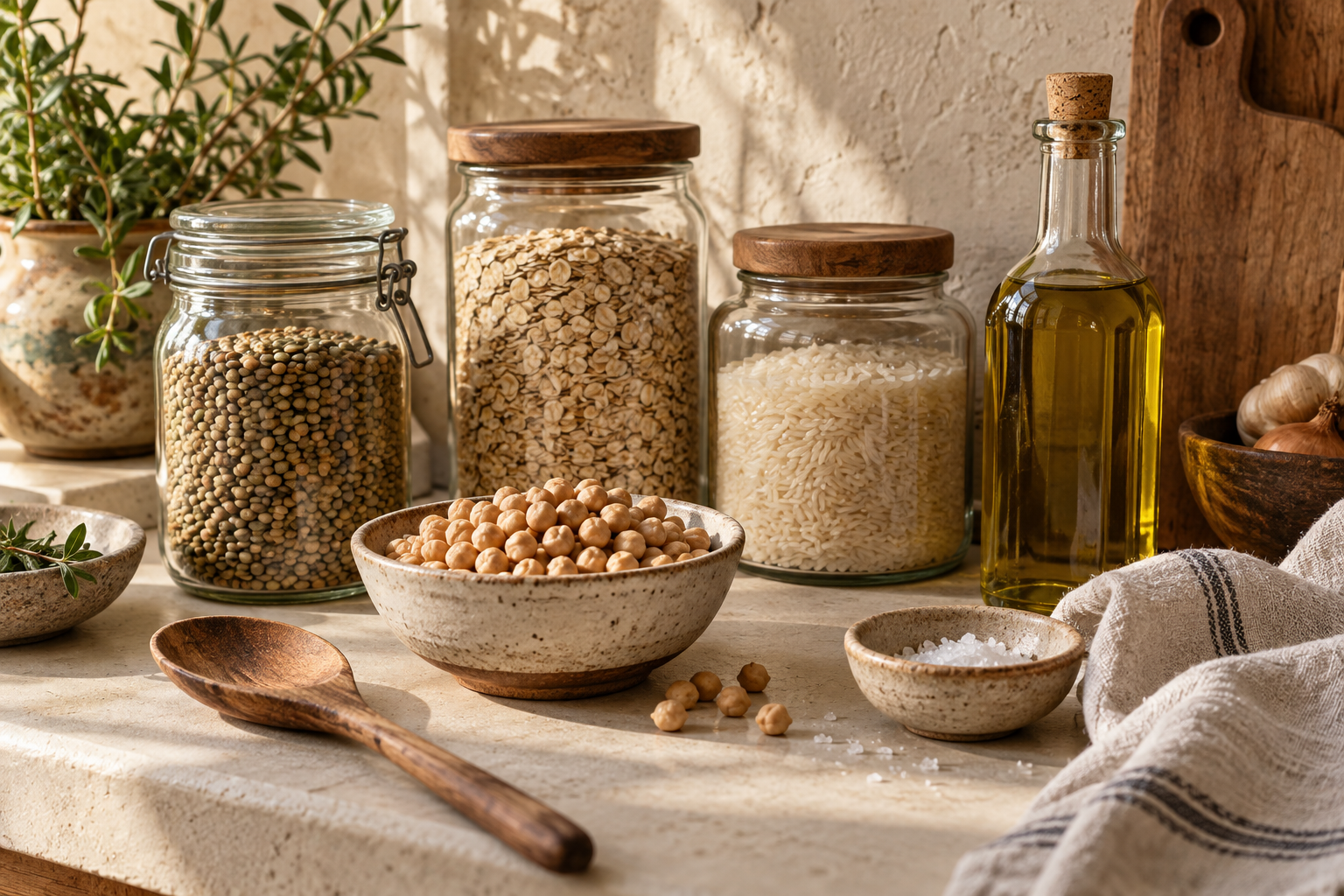
Start with a short group you already understand: one or two kinds of beans, a grain you enjoy, tomatoes, oil, and a few seasonings. Add fresh and frozen foods around those. When a new ingredient interests you, find two realistic uses before buying a large packet.
The useful question is not whether a food belongs on somebody else's essential vegan list. It is whether you will reach for it on an ordinary evening. If your reliable meals use rice and chickpeas, there is little value in buying five other grains simply to make the shelf look more complete.
Give each purchase two destinations
Take a tin of tomatoes. Half can become sauce for a small pasta meal; the remainder might belong in a bean soup, with appropriate chilled storage between uses. A bag of lentils can make soup and a warm salad if you choose a variety that suits both. This is more useful planning than buying ingredients from a long list without imagining the meals.
There will be exceptions. A special baking project might need something you rarely use, and that is fine when the project is the point. Buy a small quantity and keep the instructions.
Before the next shopping trip, look at what has not moved. If a packet has survived several meal plans untouched, ask whether you actually like it or merely liked the idea of owning it. A working pantry changes with your habits. It does not have to resemble a photograph to be well equipped.